

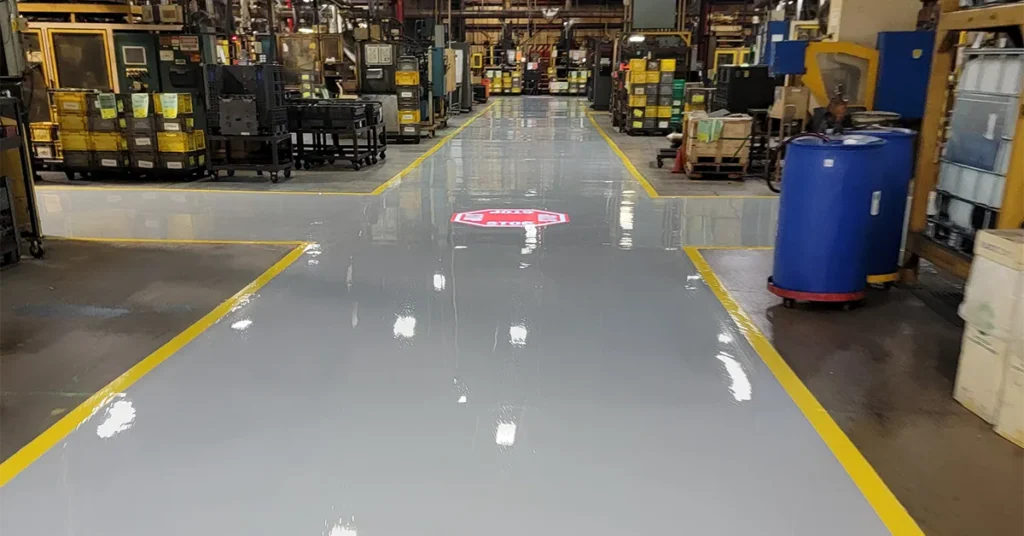
When you walk through a warehouse or factory, the floor probably isn’t the first thing you notice. Yet it carries the heaviest burden. It supports equipment, forklifts, pallets, and workers who move constantly, as well as sometimes chemicals, oils, and moisture. A weak or unprotected floor can slow operations, create hazards, and lead to costly repairs. This is why more facilities are turning to industrial epoxy flooring as their long-term solution.
Industrial spaces require flooring that won’t crack under pressure, fade after a few months, or demand constant maintenance. Epoxy brings all of that together with strength, safety, and a clean, polished look that makes the entire workspace feel more organized and efficient.
Let’s go over the preferred choice for warehouses and factories, what it offers, and why partnering with the right industrial epoxy flooring contractor makes all the difference.
The Demands of Industrial Environments
Warehouses and factories operate in conditions that push flooring to its limits. You have heavy machinery, daily traffic, dropped tools, temperature changes, oils, chemicals, and constant movement. Traditional concrete struggles under such wear. Dusting, cracking, and surface damage are common.
Epoxy flooring changes that experience completely. It creates a protective layer that bonds tightly to the concrete below and forms a seamless surface strong enough to handle industrial life without breaking down.
This is why epoxy industrial flooring has become a practical solution for facilities that require smooth, safe, and durable floors.
What Makes Industrial Epoxy Flooring So Reliable
Epoxy flooring brings together durability, chemical resistance, and design flexibility. Here is a closer look at what sets it apart.
1. Extreme Durability
A warehouse or factory floor must handle weight and movement all day. Forklifts roll across it. Pallets get dragged. Equipment gets shifted. Tools fall. Concrete alone can only handle so much before showing wear.
Epoxy forms a tough surface that absorbs impact instead of chipping or cracking. It stays stable even under heavy loads and keeps its appearance long after installation.
2. Chemical and Spill Resistance
Many industrial facilities deal with oils, solvents, cleaners or liquids that can damage concrete. Epoxy creates a barrier that protects the floor from stains and chemical reactions.
This prevents corrosion and keeps the workspace safer and easier to clean.
3. A Safer Work Environment
Epoxy flooring can improve workplace safety in several ways:
- It creates a smooth surface with fewer trip hazards
- It can be installed with a non-slip texture
- It reflects light, making the space brighter
- It supports safety markings and designated zones
In a busy industrial setting, these small improvements make a big difference in daily operations.
4. Easier Maintenance and Cleaning
Dust, debris, and spills collect quickly in warehouses. Epoxy seals the tiny pores in concrete, preventing dust from hiding. This keeps the floor easier to clean and helps control airborne particles.
Daily sweeping is easier. Mopping is quicker. Spills stay on the surface instead of sinking in. A clean floor also helps equipment run smoothly, as dust buildup can affect the performance of machinery.
5. Long-Term Cost Efficiency
While epoxy installation is an upfront investment, it saves money in the long run. The floor lasts longer, requires fewer repairs, and keeps operations running smoothly. Downtime caused by cracked or damaged flooring can be expensive. Epoxy reduces that risk.
Facilities often find that the durability of epoxy translates into lower maintenance budgets and fewer disruptions.
Why Industrial Spaces Benefit More From Epoxy Than Other Flooring Options
Many flooring materials claim to be durable, but few can withstand the intense conditions of industrial environments. Here is how epoxy compares.
Concrete Alone
Bare concrete wears down quickly and becomes dusty. Cracks, chips, and moisture issues appear often.
Tile or Vinyl
These can peel, break, or trap dirt in the seams. Heavy traffic destroys them fast.
Rubber Flooring
Comfortable but not ideal for forklifts or heavy equipment.
Epoxy blends strength and practicality in a way that other materials cannot match. It reinforces the concrete, extends its lifespan, and adapts to the facility’s needs.
Where Industrial Epoxy Flooring Works Best
Epoxy is used in many industrial applications because of its versatility. Some of the most common places you’ll find it include:
- Warehouses
- Manufacturing plants
- Distribution centers
- Food processing facilities
- Automotive shops
- Chemical storage areas
- Pharmaceutical facilities
Each of these environments has different demands, yet epoxy fits them all because of its ability to resist wear, chemicals, and continuous activity.
Why Choosing the Right Industrial Epoxy Flooring Contractor Matters
A high-quality product only performs well when installed correctly. Industrial spaces require skill, planning, and technical understanding. Moisture levels, surface preparation, and cure times all affect how the floor turns out.
A professional industrial epoxy flooring contractor ensures:
- Proper surface grinding and preparation
- Correct mixing ratios for maximum durability
- Application techniques that prevent bubbling or uneven texture
- Safety measures during installation
- A finish suited to the facility’s traffic and chemical exposure
Experienced contractors also help businesses choose the right thickness, texture, and system depending on the environment. This guidance often prevents future maintenance problems.
What the Installation Process Looks Like
Epoxy installation is methodical and precise. Here is a simple breakdown of what typically happens:
1. Assessment and planning
The contractor evaluates the concrete floor condition, moisture, cracks and any existing coatings.
2. Surface preparation
Grinding, cleaning, and repairing the slab creates a clean surface that epoxy can bond to.
3. Application of primer
The primer strengthens adhesion and seals the surface.
4. Epoxy coating
The epoxy is applied smoothly across the floor. Depending on the system, it may be layered for added strength.
5. Topcoat
A final protective coat improves durability and makes the surface easier to clean.
6. Curing
The floor needs time to fully harden before use. Once cured, it becomes strong enough for industrial traffic.
A well-installed epoxy floor becomes part of the workflow rather than something that interrupts it.
FAQ’s
How long does industrial epoxy flooring last
With proper installation and normal maintenance, epoxy flooring can last many years even in demanding industrial environments.
Can epoxy handle forklift and heavy machinery traffic
Yes. Epoxy flooring is specifically designed to support heavy loads and constant movement.
Does epoxy resist chemicals and oils
Epoxy forms a protective barrier that prevents most industrial chemicals and oils from penetrating the surface.
Is epoxy flooring slippery
Texture additives can be added during installation to improve traction and prevent slipping.
How long does installation take
It depends on the size of the space, but most industrial floors are completed within a few days, including curing time.
Conclusion
Industrial facilities require flooring that does not hinder their operations. They need surfaces that handle daily stress, resist damage, and support a safe and efficient work environment. Industrial epoxy flooring provides all of that and more. It strengthens the floor, improves safety, simplifies cleaning, and keeps operations moving smoothly.
Whether you manage a warehouse, run a production line, or operate a busy distribution center, epoxy gives you a reliable foundation you can count on. And with the right industrial epoxy flooring contractor, the results last for years and support the entire workflow of the facility.